
Vasectomy is a form of permanent sterilization for men. The procedure involves cutting and sealing the tubes (vas deferens) that deliver sperm into a man’s ejaculatory fluid so he is no longer able to fertilize his partner’s eggs.
Vasectomy is one of the most effective methods of birth control available, and about 500,000 men in the U.S. choose to undergo the procedure every year.1 It’s reported pregnancy occurs only in 1 to 2 out of every 1000 couples in which the man has had a vasectomy.2
How is a vasectomy performed?
The surgery is usually done under local anesthesia. There are several vasectomy techniques currently in use, but the general procedure remains the same:
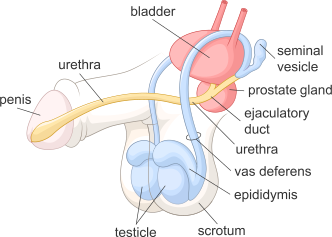
- A small incision or puncture is created in the scrotum.
- The vas deferens (sperm tubes) are exposed by pulling them through the opening.
- A small segment of the vas deferens is removed with a scalpel.
- The ends of the tubes are generally sealed or tied off in some fashion.
What’s the difference between conventional and no-scalpel vasectomy?
Conventional vasectomy
During a conventional vasectomy, the scrotum is first numbed with a local anesthetic. The doctor then uses a scalpel to make two small incisions on each side of the scrotum to reach the vas deferens. Once both tubes are cut and closed, the incisions will be stitched together to complete the vasectomy.
No-scalpel vasectomy
During a no-scalpel vasectomy (also referred to as NSV or keyhole vasectomy), the vas deferens are held in place with a small clamp from outside the scrotum. Instead of making two incisions, the surgeon makes one tiny puncture with a special instrument (hemostat) and gently stretches the opening until the vas deferens can be reached. The sperm tubes are then closed using the same methods as conventional vasectomy.
The no-scalpel vasectomy takes less time to perform, and because the puncture site is so small, it doesn’t usually require stitches. The no-scalpel method is also associated with fewer postoperative complications. It’s reported there’s almost five times fewer infections, hematomas, and other complications.3
How long does it take to recover from a vasectomy?
Vasectomy recovery is usually very quick. Immediately after the operation, it’s not uncommon to experience some discomfort, swelling, and bruising of your scrotum. You should be able to return light, non-strenuous physical activity in two to three days. Most men can expect to make a full recovery within a couple of weeks.
You do not have to confine yourself to the bed for the recovery period but do take adequate rest after surgery. The care you take during the first week is a major factor in the success and safety of the procedure.
Recommended products for recovery
We only recommend products we think are useful for our readers. If you make a purchase, we may earn a small commission. JockstrapsPapi Men’s Cotton Jock Strap 3-Pack
 Ice packsTheraPearl Ice Pack with Gel Beads
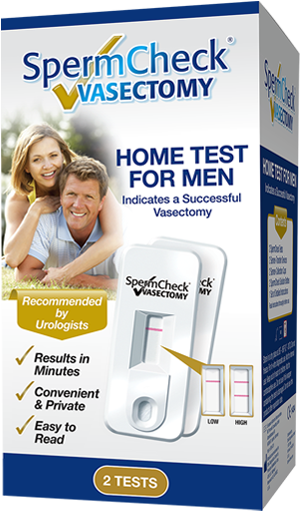 Home Vasectomy TestSpermCheck Vasectomy Test Kit
 Donut-shaped pillowErgonomic Innovations Orthopaedic Seat
Will a vasectomy affect my sex life?
A vasectomy is a surgical procedure that blocks sperm from entering the semen. It doesn’t affect how sexual organs function or lower a man’s libido. And since sperm only make up 2% to 5% of the ejaculate, the difference in volume won’t be noticeable to a man or his partner.4
Some men even report that without the constant worry of unwanted pregnancy and the hassle of other birth control measures, they are able to relax and enjoy sex more than ever.5
Suggested readingWhen can I resume sexual activity?
In general, sexual intercourse can be resumed a week after the procedure, but remember live sperm can remain in the vas deferens above the operation site for weeks or even months after a vasectomy. You can’t be considered sterile until the doctor has analyzed a sample of your semen, and you have to use an alternative method of contraception until then.
Recommended product
Home Vasectomy Test Kit
View on Amazon Read our review We only recommend products we think are useful for our readers. If you make a purchase, we may earn a small commission.How effective are vasectomies?
Vasectomy is one of the most effective forms of birth control available, and the most effective method for men. Vasectomies are nearly 100% effective at preventing pregnancy. The estimated failure rate is just 0.15%.2 So vasectomy failure is extremely rare, but in a small number of cases, it can happen.
Reasons for vasectomy failure are:
- Having sex too soon
- Recanalization (sperm tubes healing back together)
- Surgical error
| Method | Perfect use | Typical use |
|---|---|---|
| Vasectomy | 0.10% | 0.15% |
| Tubal ligation | 0.5% | 0.5% |
| IUD | 0.6% | 0.8% |
| Pill | 0.3% | 9% |
| Condom | 2% | 18% |
What are the risks of a vasectomy?
There are hundreds of thousands of vasectomies performed every year, and most doctors consider it to be one of the safest and most effective forms of permanent birth control available. However, like any surgical procedure, there are risks involved with having a vasectomy. Complications are very uncommon, but it is important that men understand the potential risks.
Possible short-term side effects include:
- Bruising & swelling
- Bleeding
- Hematoma
- Infection
Possible long-term complications include:
- Sperm granuloma
- Congestive epididymitis
- Post-vasectomy pain syndrome (PVPS)
Is it possible to reverse a vasectomy?
From a surgical standpoint, most vasectomies can be reversed. Its estimated 3% to 6% of men who have had a vasectomy will seek reversal later in life.6 However, the reversal procedure, called vasovasostomy, is more complicated than a vasectomy and does not guarantee a return to fertility.
Vasectomy reversal has a variable rate of success that depends heavily on the man’s age, years since his vasectomy, and other factors. Men should not look at vasectomy as something they can easily “undo” later in life.
Suggested readingIs a vasectomy right for you?
The decision to have a vasectomy is an important one. To make an informed decision, consider the risks and benefits of all birth control methods, and determine which option is most suitable for you. Many men opt for a vasectomy because it represents the most reliable method of preventing pregnancy, coupled with the lowest overall medical risk for the couple. However, it’s not the right choice for everyone. Vasectomy is not a temporary method of birth control, it should be considered permanent sterilization, and you need to be sure you are happy with it.
Vasectomy is most likely to benefit:
- Couples in long term, stable relationships
- Couples who both agree they have all the children they want.
- Couples that have been carefully counseled, discussed the risks and benefits fully and have not made a rushed decision under pressure.
- Where other methods of birth control are unsuitable, or the wife/partner has health problems that make pregnancy unsafe.
Vasectomy is least likely to benefit:
- Men in couples in which one partner is unsure about having children in the future.
- Men whose relationships are unstable or going through a stressful phase.
- Men who are considering the operation just to please their partners, or are being pressured by their partner.
- Men who are counting on having children later by storing sperm or by surgical reversal of the vasectomy.
- Men who are single, divorced or separated at the time of vasectomy.
Summary
Vasectomy is an outpatient procedure performed on a man that will permanently keep him from being able to get a woman pregnant. The surgery involves the surgical disconnection of the tubes that carry sperm from the testicles to the ejaculatory ducts. A vasectomy blocks the transport of sperm. The operation does not affect the man’s ability to achieve orgasm or ejaculate. There will still be a fluid ejaculate after the procedure, but it won’t contain sperm.
Vasectomy is a safe and highly reliable procedure for preventing pregnancy. However, all medical procedures carry some risk, including vasectomy. Men should be aware of the risks and potential complications that could occur after the procedure and over time before deciding to undergo surgery.
Vasectomy should not be considered contraception – it is sterilization, and should be regarded as permanent. Vasectomies can be reversed, but the reversal procedure does not guarantee the restoration of fertility. If you think you might change your mind later or are not absolutely sure you want to be sterilized, you should consider other methods of birth control.
References and further reading
Vasectomy-Information.com has a strict sourcing policy. We rely on evidence-based medicine, peer-reviewed studies, reputable clinical journals, and medical associations. Learn more about how we ensure our content is accurate and up-to-date by reading our editorial policy.- Sharlip I, Belker A, Honig S, et al. Vasectomy: AUA guideline. J Urol. 2012;188(6 Suppl):2482-2491. doi:10.1016/j.juro.2012.09.080
- Trussell J. Contraceptive failure in the United States. Contraception. May 2011:397-404. doi:10.1016/j.contraception.2011.01.021
- Cook L, Pun A, Gallo M, Lopez L, Van V. Scalpel versus no-scalpel incision for vasectomy. Cochrane Database Syst Rev. 2014;(3):CD004112. doi:10.1002/14651858.CD004112.pub4
- Semen. Encyclopædia Britannica. https://www.britannica.com/science/semen. Published April 11, 2015.
- Mohamad A-A, Shamloul R, Ramsauer J, et al. The effect of vasectomy on the sexual life of couples. J Sex Med. 2014;11(9):2239-2242. doi:10.1111/jsm.12567
- Smith R, Patel A. Vasectomy reversal: a clinical update. Asian J Androl. 2016:365. doi:10.4103/1008-682x.175091
- Vasectomy (male sterilisation). NHS. Published February 22, 2018. https://www.nhs.uk/conditions/contraception/vasectomy-male-sterilisation/
- Vasectomy. Harvard Health Publishing, Harvard Medical School. Published April 2019. https://www.health.harvard.edu/medical-tests-and-procedures/vasectomy-a-to-z
- Vasectomy. Mayo Clinic. Published February 14, 2019. https://www.mayoclinic.org/tests-procedures/vasectomy/about/pac-20384580
- Vasectomy: Treatment & Information. Urology Care Foundation. https://www.urologyhealth.org/urologic-conditions/vasectomy
- Patient information: Vasectomy. Marie Stopes Australia. https://www.mariestopes.org.au/vasectomy_patient_information-1803/
- Moss D, Russell T, Moss J, Stephens M, Rollins A. FPIN’s clinical inquiries. Advantages of the no-scalpel vasectomy technique. Am Fam Physician. 2012;85(12):1-2. https://www.aafp.org/afp/2012/0615/od1.html
- Post-Vasectomy Care & Recovery | Patient Instructions. Pollock Clinics. https://www.pollockclinics.com/no-scalpel-vasectomy/after-vasectomy/
- Ejaculation After Vasectomy. Dr. Harry Fisch, Vasectomy Surgeon, NY. Published February 27, 2018. https://harryfisch.com/ejaculation-after-vasectomy/
- Barone MA, Pollack AE. Long-Term Risks of Vasectomy. GLOWM. Published online 2009. doi:10.3843/glowm.10409
- Vasectomy and Vasovasostomy (Reversal Surgery). Well-Connected reports. Harvard Medical School. September 2001.
- Contraception | Reproductive Health. CDC (Centers for Disease Control and Prevention). https://www.cdc.gov/reproductivehealth/contraception/index.htm
- Pregnancy After Vasectomy – Vasectomy Reversal. American Pregnancy Association. https://americanpregnancy.org/getting-pregnant/pregnancy-after-vasectomy
- Shah Z, Ganta S, Morgans B. The trends of vasectomy reversal in the forces. J R Army Med Corps. 2003;149(4):265-266. doi:10.1136/jramc-149-04-04
- Potts J, Pasqualotto F, Nelson D, Thomas A, Agarwal A. Patient characteristics associated with vasectomy reversal. J Urol. 1999;161(6):1835-1839. https://www.ncbi.nlm.nih.gov/pubmed/10332448.